What’s Really Happening to Your Hair After 50 (And How to Work With It)
Let’s name it. Your ponytail feels thinner. Your part looks wider than it used to. Your hair takes longer to grow, dries out faster, and doesn’t hold a style the way it did a decade ago. If you’ve noticed all of this and started wondering if you’re imagining it, you’re not. This is real, it’s common, and there’s a reason behind it.
More than half of women over 50 experience some degree of hair thinning, and it isn’t random. It’s driven by the same hormonal shift behind everything else happening in your body at this stage: declining estrogen. Understanding what’s actually going on gives you a real plan, instead of just throwing product at the problem and hoping.
The Real Reason Your Hair Is Changing
Estrogen does a lot of quiet work for your hair. It keeps hair follicles in their active growth phase longer, supports blood flow to the scalp, and helps regulate the natural oils that keep strands smooth. When estrogen drops during perimenopause and menopause, hair follicles spend less time growing and more time resting, which shows up as slower growth, reduced density, and a wider part. You might also experience more hair shedding, which can be really concerning. You are genuinely not alone in this, even if it doesn’t feel that way when you’re staring at the shower drain.
Dryness and brittleness follow the same pattern. Less estrogen means less natural oil production, so hair that used to bounce back from heat styling or color now breaks more easily and feels coarser or duller than it used to.
What Actually Helps
You can’t reverse hormones with a shampoo, but you can absolutely work with what your scalp and strands need right now.
Prioritize scalp health, not just hair health. Healthy hair grows from a healthy scalp. Gentle scalp massage increases blood flow to the follicles, and choosing sulfate free, moisture focused formulas keeps your scalp from getting stripped and irritated, which can worsen shedding.
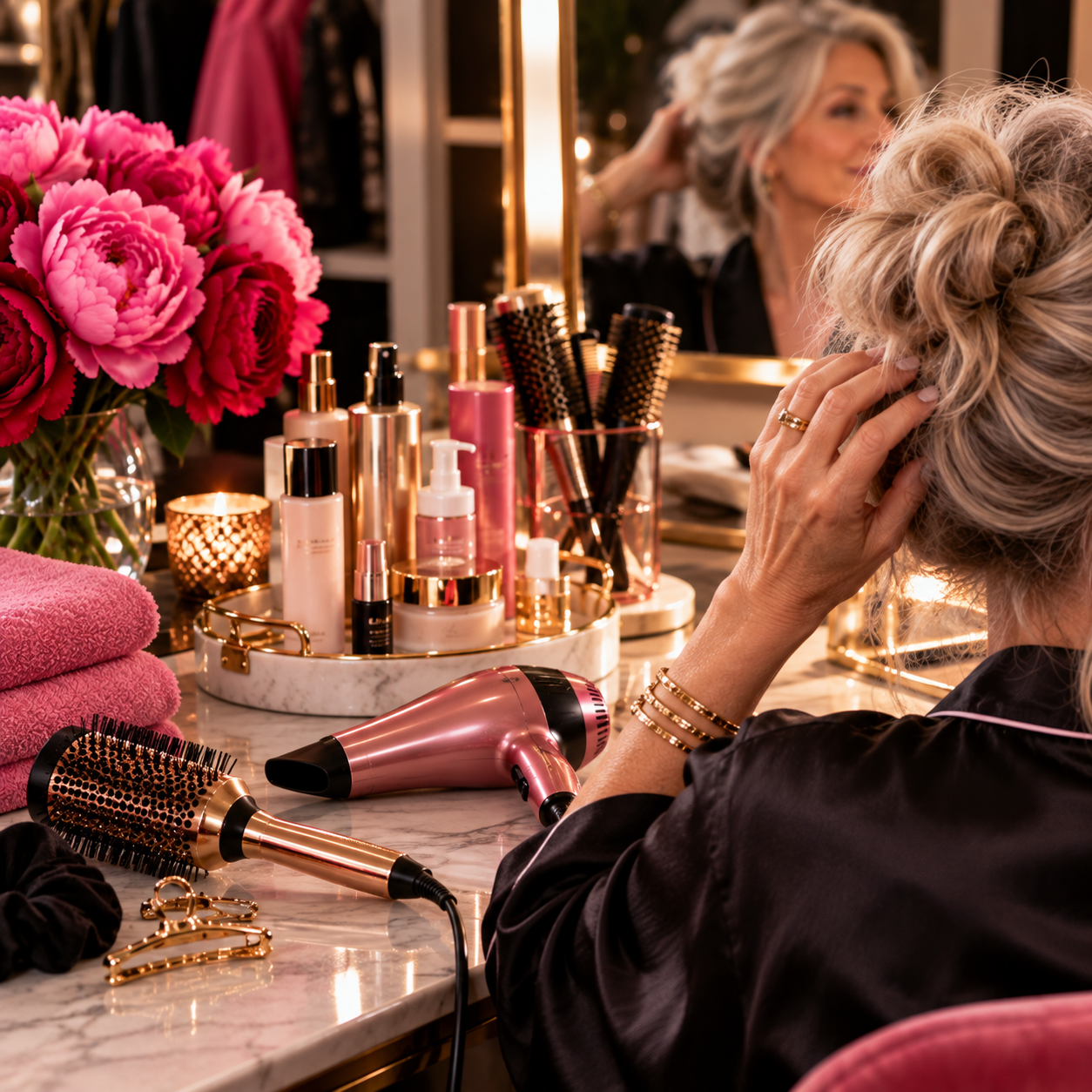
Cut back on heat, or at least protect against it. Your hair has less natural resilience than it used to, so the same flat iron routine that was fine at 35 can cause real breakage now. If heat styling is non-negotiable for you (no judgment, I get it), a heat protectant isn’t optional anymore.
Feed it from the inside too. Hair is a reflection of your overall health. Protein intake, iron levels, and thyroid function all play a role in hair growth cycles, so if your thinning feels sudden or severe, it’s worth a conversation with your doctor to rule out other causes beyond menopause alone.
Talk to a professional if it’s affecting your confidence. There are legitimate medical and dermatological options for menopausal hair thinning, and there’s zero shame in exploring them. A dermatologist or trichologist can tell you what’s actually happening on your scalp instead of you guessing from the internet.
Give Yourself Some Grace Here
I want to say this plainly: thinning hair doesn’t make you less vibrant, less put together, or less you. It’s a normal part of what your body is going through, the same as everything else menopause throws at us. The women who navigate this best aren’t the ones who panic; they’re the ones who understand what’s happening and make small, consistent adjustments instead of chasing a miracle.
Your hair, like everything else about you at this stage, doesn’t need to fade. It just needs a little different care than it used to.
For my personal picks on scalp care, shampoo and conditioner, and the tools I actually use and recommend, check out my FABFAVORITES page. It has all my go to product recommendations in one place, including a few affiliate links, so you can shop what actually works.